Tih Press
Sinai peninsula · El-Tor · since 2013

The Sinai is half a country in its own right, and almost no English-language reference treats it that way.

Tih Press is a small editorial desk in El-Tor on the western coast of the Sinai peninsula. Since 2013 we have written, dated, and re-verified a single working reference covering the monasteries of the interior, the Bedouin routes of the Wilderness of Tih, the dive coast from Dahab to Taba, and the practical logistics of crossing in from Cairo, Hurghada, Eilat or Aqaba.

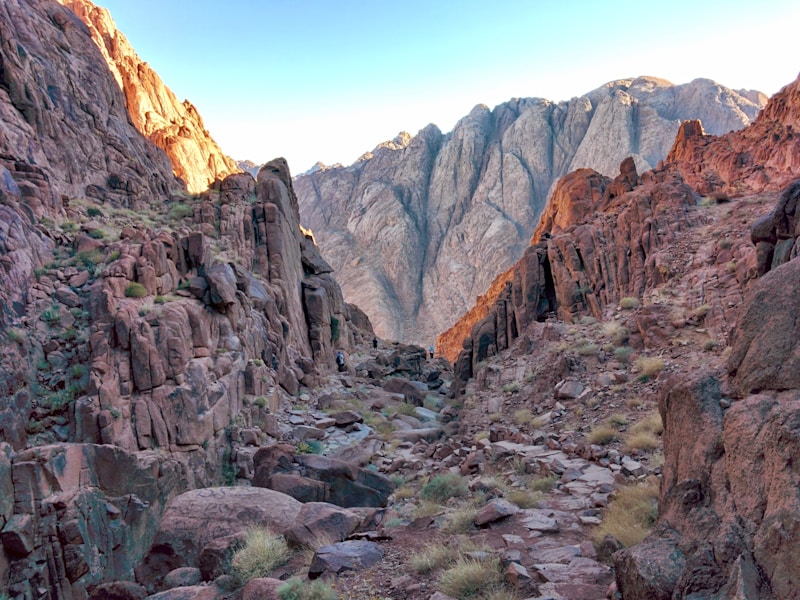
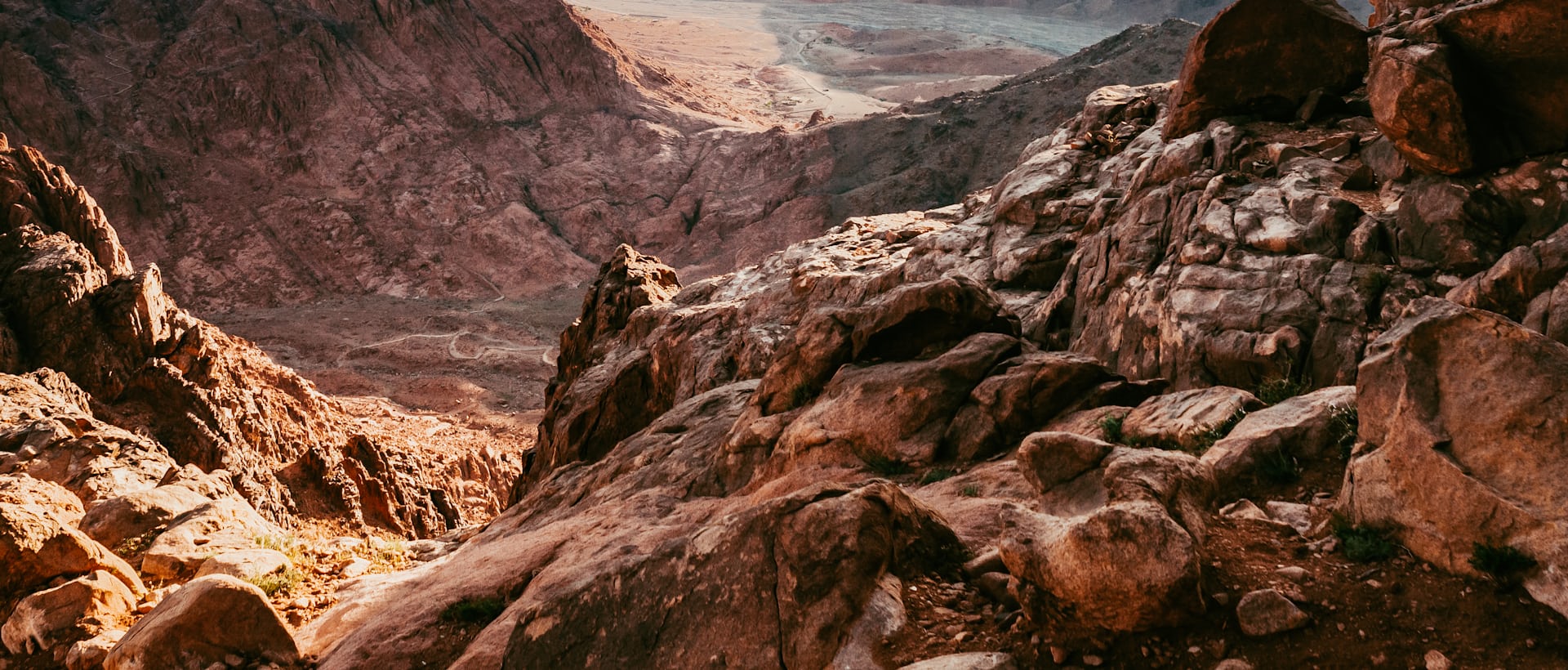
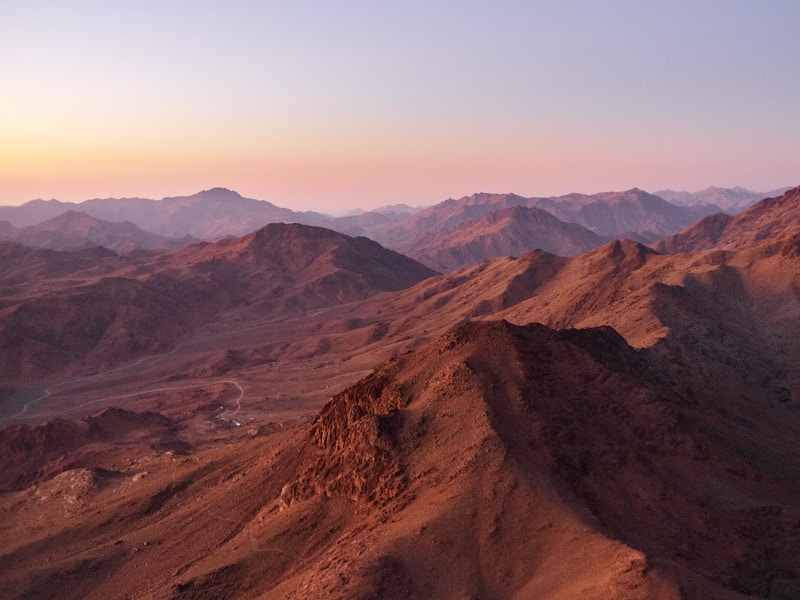
Granite peaks of the Sinai interior at first light, viewed from the trail above the monastery
Six files in the navigation

The six places a first-time visitor builds the trip around.

Each file is a maintained working reference — dated last-verified line, current ticket and access conditions, drive logistics from the nearest base, and a public change log. The seventh file (Taba border crossing) sits in the footer and is the one people open at the end of their planning, not the beginning.

Granite walls of St Catherine's Monastery at the foot of Mount Sinai
St Catherine · 1,570m

St Catherine's Monastery

A working Orthodox monastery in continuous use since the sixth century, holding what is by some measures the oldest active library in the world and the icon corpus that survived the Byzantine iconoclasm because the Sinai sat outside imperial reach.

Open the file
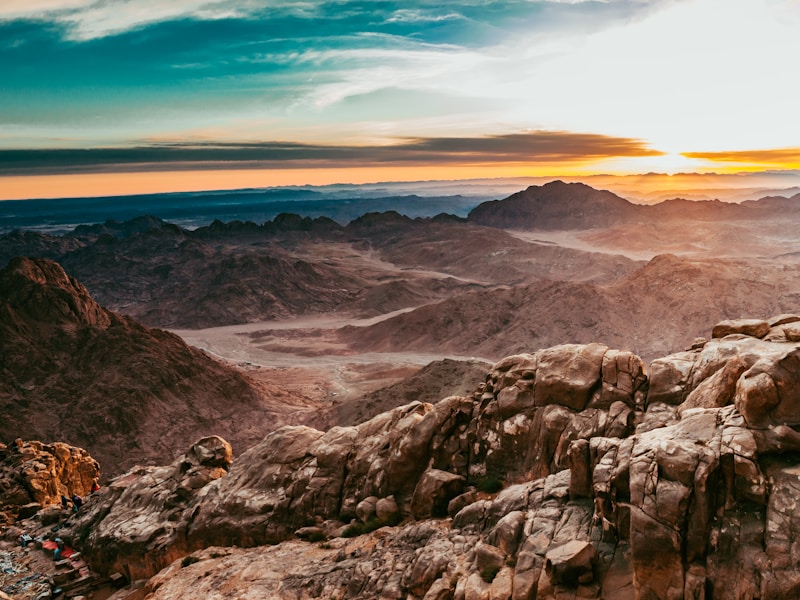
Stone steps and granite ridges on the Sikkit Sayidna Musa route up Mount Sinai
Mount Sinai · 2,285m

Mount Sinai sunrise trek

The mountain identified by the Christian and Islamic traditions as the Mount of Moses. Two routes up — the camel path and the Steps of Repentance. The 3am sunrise climb is the standard visitor pattern; we lay out the calmer alternatives.

Open the file
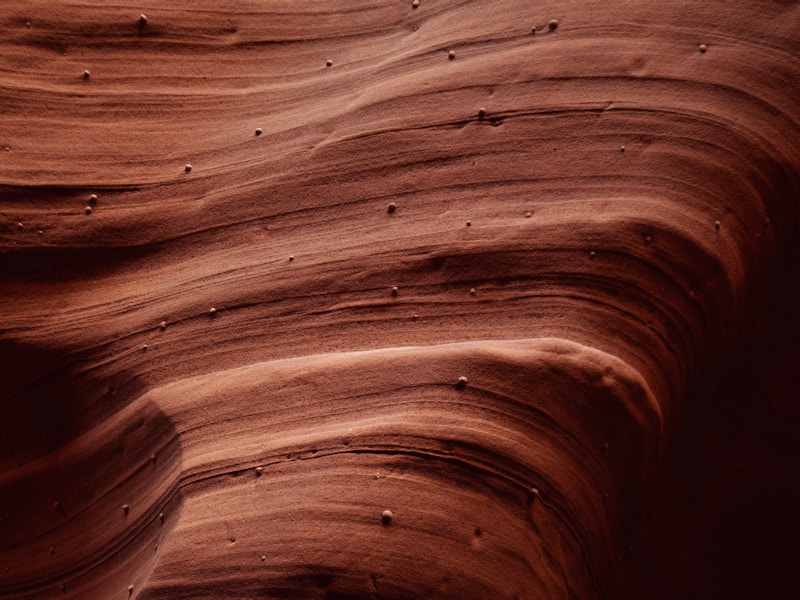
Layered sandstone walls of the Coloured Canyon near Nuweiba in afternoon light
Wilderness of Tih

The Coloured Canyon

A narrow water-cut slot in layered sandstone north-west of Nuweiba, where iron oxidation in the rock walls produces the bands of red, orange, yellow and lavender that give the canyon its name. Three kilometres of slot, reachable only by 4×4 from the highway.

Open the file
The lip of the Blue Hole at Dahab with a clear deep-blue circle in the reef shelf
Dahab · Gulf of Aqaba

Dahab Blue Hole

A 130-metre submarine sinkhole in the fringing reef ten kilometres north of Dahab town. Recreational snorkellers see one of the most spectacular shallow reef walls in Egypt; technical divers attempt the Arch at 56 metres. We treat the safety record honestly.

Open the file
A Bedouin camp on the shore north of Nuweiba with thatched shade structures and palm trees
Nuweiba · East Sinai coast

Nuweiba Bedouin camps

A 30-kilometre strand of small Bedouin-owned camps between Nuweiba town and Taba, offering reed-and-palm cabins on the beach, family meals around a fire, and a much quieter way of being on the Sinai coast than the dive-town infrastructure of Dahab.

Open the file
Mangrove channels and tidal flats of the Nabq protected area on the Gulf of Aqaba
Nabq · Sharm hinterland

Nabq protected area

A 600-square-kilometre national protectorate north of Sharm El-Sheikh that holds Egypt's largest surviving mangrove stand, a small Bedouin fishing village, and the wreck of the Maria Schroeder grounded on the reef in 1956. Reached by 4×4 from the Sharm coastal highway.

Open the file
Method

A four-step verification cycle, on a 90-day rotation.

Most published English-language material on the Sinai is fifteen years old and reads it. The desk works to a defined editorial standard precisely because the alternative — recycling other people's blog posts — would put us in the same situation that we try to help our readers avoid.

Walk it

An editor visits every covered location at least once per ninety days. The visit is paid for, never complimentary; complimentary trips distort the editorial record and we will not accept them.

Date it

Every published claim carries the date it was verified and the editor signature. Earlier dates appear as new entries in the change log; the log is append-only.

Translate it

Arabic-language SCA Sinai inspectorate bulletins and the local-press reportage are translated by a bilingual editor before they go on the public file. The translation choices are recorded.

Cross-check it

Every claim is checked against either the published academic literature on the site, the printed brochures of the national protectorate office, or the Greek-language records of the St Catherine monastic library where applicable.

Why us

A desk in El-Tor that picks up the phone in Arabic, English or Greek.

The Sinai is a complicated jurisdiction — South Sinai Governorate is governed from El-Tor, the protected areas report to the Nature Conservation Sector in Cairo, the monastery has its own ecclesiastical autonomy under the Patriarchate of Jerusalem, and the Taba border crossing answers to both military and tourism authorities. We talk to all of them every quarter so that the published files reflect the live situation, not the situation as it was the last time someone wrote a guidebook.

  • Local desk. Office hours Saturday through Thursday, 09:00–16:30 Cairo time. Reply window: one business day, in English, Arabic or Greek.
  • No advertising income. The pages carry no display advertising and no affiliate links. Income is reader subscriptions and one-off planner briefs.
  • Three editors. Three full-time editorial staff plus a rotating two-person contributor bench. Names on every dated entry.
  • Verifiable. Subscribers can request the underlying dated photograph for any published claim on any of the seven files.
The Tih Press editorial office in El-Tor with maps on the wall and reference books on the desk
13 Years of continuous publication since the El-Tor desk opened in November 2013.
~410 Site visits logged across the seven files between 2013 and the end of last quarter.
3 Languages we reply in directly — English, Arabic and Greek (the latter for monastic-library enquiries).
23 Bilingual monographs and translated SCA bulletins indexed for subscribing readers.
Who reads us

Subscribers fall into three broad groups.

The notes below come from active subscribers quoted with permission. They give a fair picture of who the archive serves and who it does not.

The dated entries on Coloured Canyon access — particularly the closure notice that went up forty-eight hours after the SCA Nuweiba office issued it — saved me from booking an obviously failed trip. No other English source had it.

Dr. Frieda Wittenburg Cultural geographer, Universität Tübingen

I plan small Christian heritage trips. The St Catherine file is the only English working reference I trust on opening hours, library access and the practicalities of the night arrival from Cairo.

Catherine Brennan Pilgrim tour designer, Dublin

The Bedouin-camps file at Nuweiba lists camps without a commission relationship. When the desk recommends a camp it actually means the editor stayed there. That is rare and worth paying for.

Yusuf Dahmash Independent travel writer, Amman
Common questions

Six things readers ask before paying for the first month.

Why only the Sinai? Do you cover the rest of Egypt?
No. The Sinai is geographically and administratively its own region, and a small editorial desk that tries to cover Egypt as a whole ends up covering nothing well. We stay focused on what we can verify on the ground and refer readers to specialist desks for the rest.
Can you arrange access to the St Catherine library?
No. The monastery library is governed by the monastic community and access is granted by the librarian under research-credential review. What we can do is tell you the current contact at the library and the typical reply window for an application; subscribers at the Library and Field tiers receive that information directly.
Do I need Arabic on the ground?
Not for the dive coast and the monastery. For the Bedouin camps and the off-track interior, a basic Arabic vocabulary helps, but the desk publishes the relevant phrases in the Nuweiba file and Bedouin-camp owners typically speak working English. We can also arrange a phone-call introduction in Arabic where useful.
How often do the public files actually change?
Each file carries a visible "Last verified" date and is reviewed at least every ninety days. Closures and reopenings of restricted areas are typically logged within forty-eight hours. The pricing of museum tickets is reviewed on a quarterly cycle.
Can I subscribe for one month?
Yes, at Reader and Library tiers. The Field tier is six months minimum because of the printed quarterly Field Notebook shipped from Cairo. All three tiers are explained on the pricing page.
Do you organise tours?
No. We do not run, sell or commission tours. We maintain a small private shortlist of Bedouin-led trek operators and dive centres that we have personally worked with; Library and Field subscribers receive the shortlist on request.

Read one file in full before deciding.

St Catherine and the Coloured Canyon are the two longest. Either is a fair test of whether the rest of the archive will be worth the monthly fee.